


















A landscape outside logic
Puna de Atacama, Argentina
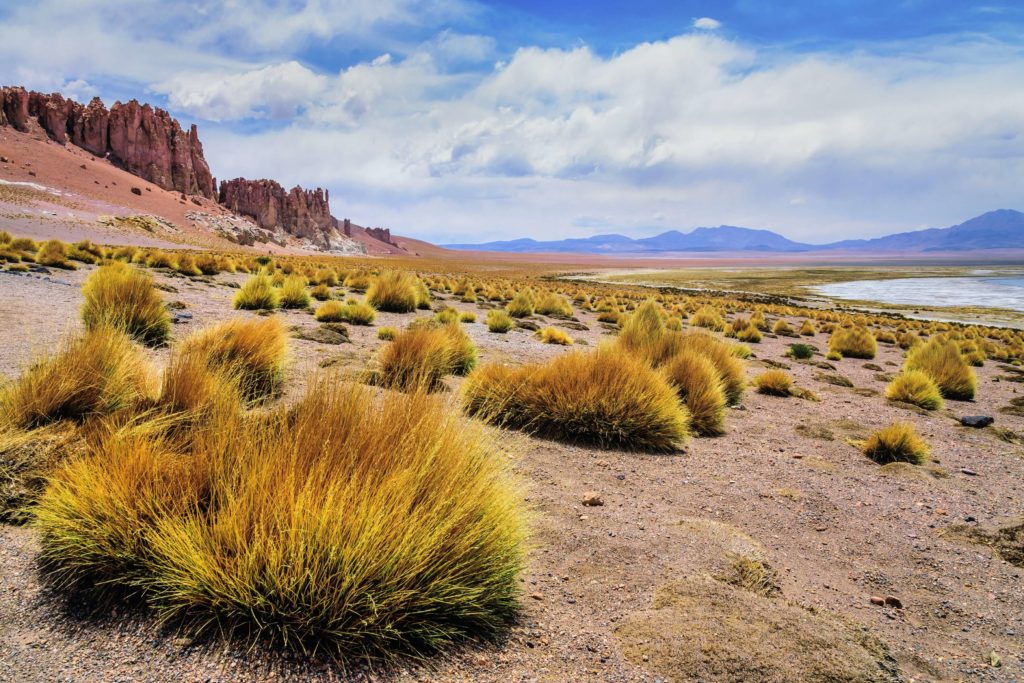
High in the Andes of Argentina, the Puna de Atacama goes all in: on altitude, on scale, on colour. One of the driest (and highest) places on the planet, where salt flats flash white against rust-red mountains, volcanoes line the horizon like sketches, and distances stretch beyond reason. Think moon, but with better lighting. It’s otherworldly and deeply still. Ready to disappear (just a little)?

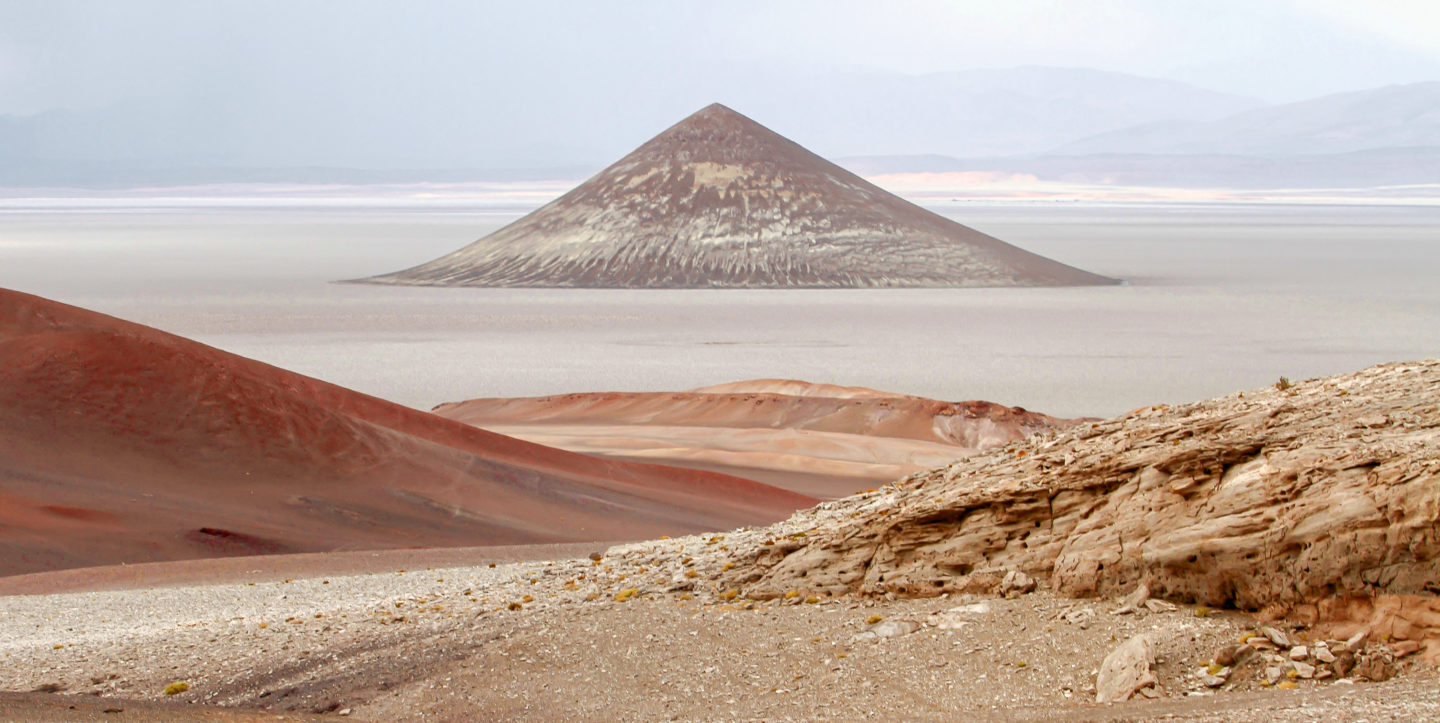
Witness the Cono de Arita
There’s surreal – and then there’s Cono de Arita. At over 3,400 metres above sea level, the Salar de Arizaro stretches across more than 1,600 square kilometres, making it one of Argentina’s largest salt flats. From its vast, mineral-white surface rises a near-perfect 200-metre cone that shifts with the light, and quietly plays with your sense of depth.

Discover Ojos del Mar
Water, out here, feels almost out of place. The Ojos del Mar are small lagoons softly shaped by the desert and glowing turquoise against the pale earth, unexpected, to say the least. But what’s beneath the surface is where things get interesting. These pools contain stromatolites, living structures formed by microorganisms over billions of years. Not bad for a desert detour.

Get lost in Piedra Pómez
Welcome to nature’s sculpture park, somewhere between desert and moon. The Piedra Pómez landscape is all wind-carved forms, pale volcanic rock and soft, shifting sands. It’s quiet, almost theatrically so, with shapes rising like frozen waves or abstract installations. Here, getting a little lost is part of the aesthetic.

Rainbow Mountains & Purmamarca
Not all rainbow mountains demand a climb to extremes. Purmamarca keeps things cool – softer hues, Andean village charm, and a front-row seat to the Cerro de los Siete Colores (Seven Colours Hill). Think centuries-old adobe houses, built from sun-dried earth and straw, and markets where locals still trade textiles the old way. Same palette, different vibe.

Essential Puna de Atacama
Argentina and Chile may share its edges, but the Puna de Atacama feels like a world of its own. High above 3,200 metres, this remote volcanic plateau stretches across borders in striking layers of colour. Distances run long, air runs thin, and everything feels pared back to the essentials. Life here follows both landscape and belief: Pachamama, Mother Earth, is quietly honoured in everyday rituals, like a simple yoki bracelet worn for protection. Give it time, and the place reveals itself, slowly, and entirely on its own terms.

Where it is
Andes region, northern Argentina (bordering Chile and Bolivia)

When to go
September to November, March to May

Why go there
Extreme landscapes
High-altitude clarity
True remoteness

What to see
Salar de Arizaro
Cono de Arita
Ojos del Mar
Piedra Pómez
Purmamarca
Cerro de los Siete Colores